
Product Description
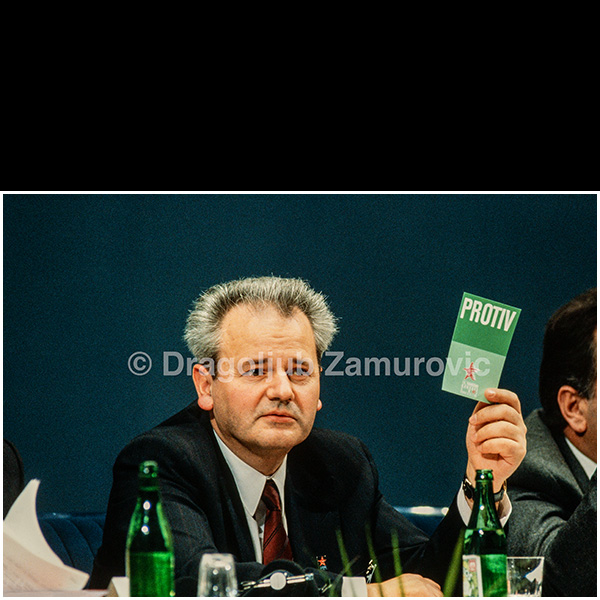
At the 14th Congress of the League of Communists of Yugoslavia, the Serbian delegation advocated the principle of one man, one vote, which in practice meant a strongly centralized Yugoslavia. The Slovenian delegation, on the other hand, proposed a confederal model. It was clear to everyone that this proposal represented only the first step toward secession, and the majority of delegates voted in favor of the Serbian position.
Following the vote, the Slovenian communists walked out of the Congress. Slobodan Milošević proposed that the Congress continue its work, but this was opposed by the delegations of Croatia, Macedonia, and Bosnia and Herzegovina. The then President of the Presidency of the Central Committee of the League of Communists of Yugoslavia, Milan Pančevski, formally concluded the Congress by announcing its continuation at a later date.
That continuation never took place. The end of the 14th Congress thus marked the end of the rule of the League of Communists of Yugoslavia and the beginning of the country’s disintegration. Across the republics, party organizations were renamed, but almost everywhere the same people remained in power, clinging tightly to their leading positions.
Many of them replaced their communist convictions overnight with various forms of nationalism. The consequences—encouraged by active involvement of international actors—were wars, mass displacement, and the suffering of countless people.
Leaving the assignment that day, I was not particularly worried. I did not yet understand that I had just witnessed the opening chapter of horrors to come: bloody wars, forced migrations, death, destruction, and widespread misery.