
Product Description
This was the first time in my life that I found myself in the midst of active warfare. I did not adapt easily, and relied heavily on advice from more experienced colleagues. Discipline among soldiers and volunteers was fragile, alcohol was consumed excessively, and behavior on the front line often bordered on chaos.
I had spent one year in the army in 1974, where I had already witnessed irresponsibility, negligence, and various forms of absurdity, but I could not have imagined such conduct in an active war zone.
Slobodan Milošević, a member of the Communist Party since the age of seventeen, sent the Yugoslav People’s Army (JNA) and paramilitary volunteers to the front line in Croatia. At the same time, Franjo Tuđman, the youngest general under Tito, was shaping an ethnically homogeneous state. Radical nationalist movements promoted the idea of a “Greater Serbia,” yet in many of the areas where they operated, almost no Serbs remained.
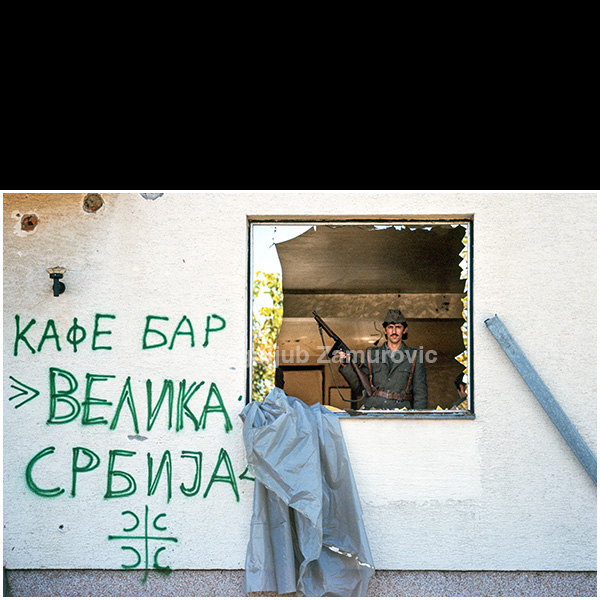
The photograph shows an armed soldier standing guard inside a destroyed café bar, framed by a shattered window. The graffiti on the wall — “Café Bar Velika Srbija” — stands in stark contrast to the emptiness and destruction surrounding him, reflecting the grim reality of nationalist slogans colliding with everyday life on the front line.