
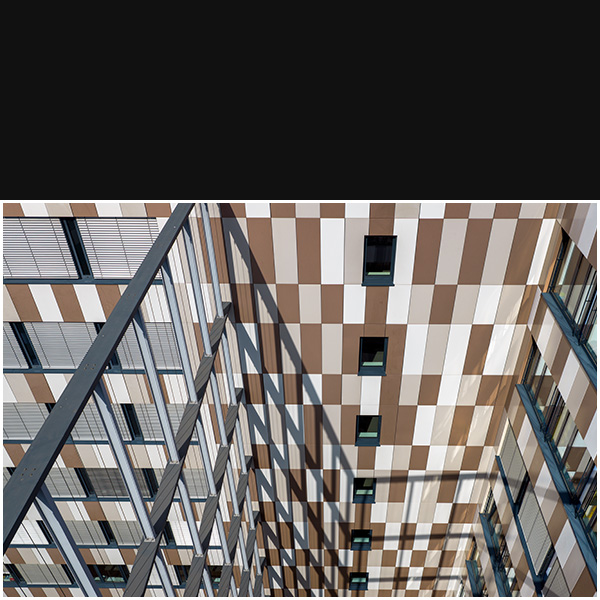
Geometry of Shadow
€100–€600
EN
I spent five batteries flying above New Belgrade — and didn’t capture anything that truly stopped me. The city was there, but without that moment that turns an image into something more than a record.
I had already decided not to load the sixth battery and to head back.
Then — out of the corner of my eye — I caught the edge of a facade.
In that instant, works by El Lissitzky and Vladimir Tatlin flashed through my mind — geometry not as decoration, but as space constructed by light, lines, and relationships.
I changed my decision.
I loaded the sixth battery and returned.
I had to lower the drone almost to the level of a neighboring rooftop, searching for the precise angle where the facade’s grid and the shadows of the metal structure collide and transform into a composition.
Only then did the building cease to be architecture.
It became an image.
The rhythm of squares, vertical windows, and diagonal shadows began to function like elements on a canvas — echoing the explorations of the Russian avant-garde, where artists sought to translate space into a pure visual language.
This photograph was not planned.
It emerged from a moment of recognition — and the decision to take off once more.
SR
Pet baterija sam potrošio leteći danas iznad Novog Beograda — i nisam snimio ništa što bi mi se zaista dopalo. Grad je bio tu, ali bez onog trenutka koji fotografiju pretvara u nešto više od zapisa.
Već sam odlučio da ne stavljam šestu bateriju u dron i da se vratim. I tada — krajičkom oka — uhvatio sam ugao jedne fasade.
U tom deliću sekunde, kroz glavu su mi prošli radovi Ela Lisickog i Vladimira Tatljina — geometrija koja nije samo forma, već prostor koji se gradi svetlom, linijom i odnosima.
Promenio sam odluku.
Ubacio sam šestu bateriju i vratio se.
Morao sam da spustim letilicu gotovo do nivoa krova susedne zgrade, tražeći tačan ugao u kome se raster fasade i senke metalne konstrukcije sudaraju i pretvaraju u kompoziciju.
Tek tada je zgrada prestala da bude arhitektura. Postala je slika. Ritam kvadrata, vertikale prozora i dijagonale senki počeli su da funkcionišu kao odnosi na platnu — bliski onim istraživanjima ruske avangarde s početka XX veka, kada su umetnici pokušavali da prostor prevedu u čisti vizuelni jezik.
Ova fotografija nije nastala planirano. Nastala je iz trenutka prepoznavanja — i odluke da se još jednom poleti.